Green Infrastructure: Tugaloo Beach
Following the installation of the Rover Run dog park on the hillside next to the parking area for the Tugaloo Swim Beach, the Tellico Village Property Owners Association (TVPOA) consented to support WATeR to undertake a water quality monitoring program to ensure suitability of the lake water at the swim beach for the purpose of recreational swimming, particularly after rainfall events.

According to the U.S. Environmental Protection Agency (EPA), "Water samples are collected to measure E. coli to make sure water is safe for public recreation, such as swimming, fishing, or canoeing. E. coli is considered an indicator organism, used to identify the possible presence of disease causing bacteria and viruses (pathogens)" (EPA factsheet: E. coli [Escherichia coli].
From 2021 through 2025, WATER conducted regular E. coli monitoring at several locations, before and after rain events. Results, measured in MPN/100 ml, were compared against Tennessee's revised single-sample recreational water quality standard of 410 CFU/100 ml (effective March 2024). MPN/100 ml and CFU/100 ml are measurements used by laboratories using different test methods but are treated as being equivalent measurements.
Areas tested included A the Rover Run swale, B the Ponded Area near the Pavilion, C the inlet to Tellico Lake, and D the Swimming Area (see attached aerial photo). The boat docks were also tested. Elevated E. coli levels were frequently recorded at the Inlet to Tellico Lake and the Swimming Area, often exceeding State standards. Major spikes were associated with heavy rainfall events (>1.0 inch), which likely caused runoff carrying bacteria into the swimming area. On several occasions, concentrations exceeded the saturation limit of the lab analysis, raising significant public health concerns. It appeared that the run-off from the dog park and surrounding area, drained onto the parking lot and was then directed into the drainage swale located immediately adjacent to the lake. This run-off contained elevated concentrations of the E. coli organisms.
To identify the source of the E. coli organisms, WATER tried DNA speciation methods for water testing, which unfortunately proved inconclusive. ​

In response, WATER consulted with Julie Konkel, PhD, a Watershed Scientist & Coordinator with the Blount County Soil & Water Conservation District who recommended green infrastructure and led the effort for the project design and implementation. She was assisted by Madeline Walker, Natural Resources Conservation Intern also with the Blount County Soil & Water Conservation District for the Project Logistics & Implementation aspects dealing with the creation of a riparian garden and drainage swale.
The actual construction of the riparian garden and swales were performed under the direction of Caleb Morris, Properties Manager of the Tellico Village Property Owners Association (TVPOA). The Tellico Village Garden Club also worked in close coordination with the TVPOA for the installation of the riparian plantings.
​
​
​


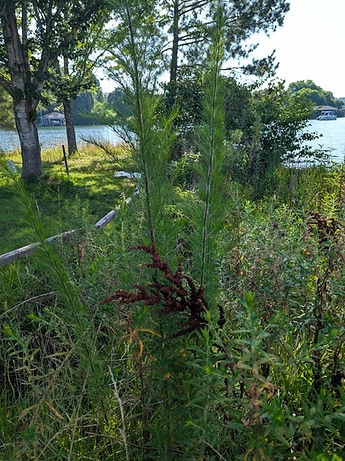
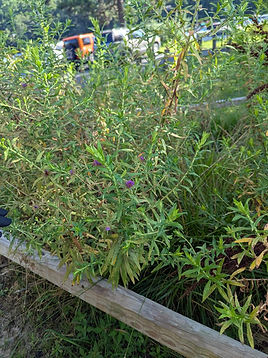
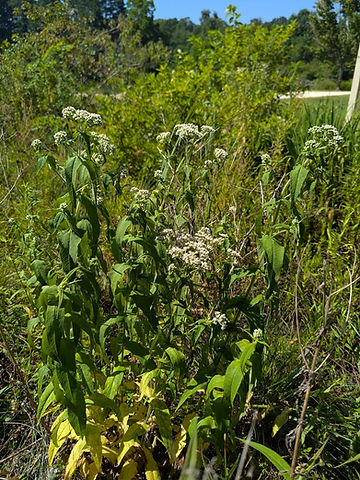
These "green infrastructure" improvements were implemented in 2023, and included the installation of a rain-garden and drainage swale upslope from the swimming area and adjacent dog runs. These features were designed to slow, filter, and absorb stormwater, thereby reducing bacterial contamination before it reached recreational waters.


From 2021 through 2025, WATER conducted regular E. coli monitoring at several locations, including Boat Docks B & C, the inlet to Tellico Lake, the Ponded Area near the Pavilion, the Swimming Area, and the Rover Run swale (see attached aerial photo). Results, measured in MPN/100 ml, were compared against Tennessee's revised single-sample recreational water quality standard of 410 CFU/100 ml (effective March 2024). MPN/100 ml and CFU/100 ml are measurements used by laboratories using different test methods but are treated as being equivalent measurements.
In addition, this project was supported through a partnership with the Tellico Reservoir Development Agency (TRDA), which provided laboratory analysis at reduced cost. Nick Galloway, Chief Operations Manager, WWTP was essential for completion of the water sample analysis.
A summary of results is provided in Table D