
Water Quality Committee
The committee consists of about twenty individuals, most of whom are retired, who have experience and interest in advocacy for the environment. We are considered a Citizen-Science group, and we foster relationships with both Academia and with Government Agencies. Our primary focus is on monitoring water quality, but we also advocate to lessen the impact of local land use on water quality. Having said that, there is ample opportunity for people of many different backgrounds.
Over the years the Water Quality Committee has led many efforts to improve and monitor the water quality of the Tellico Reservoir Watershed. Most noteworthy of these efforts was the effort to improve the effluent from the Madisonville Water treatment plant. This effort took many years, coordination with other government and private agencies, and several court cases.
WATeR has also worked with other agencies to improve agricultural practices to lessen pollution runoff into the lake. These efforts are on-going. Agricultural runoff pollution is significant in this watershed because much of the watershed is located in rural, agricultural, areas.
Perhaps the most critical and unaddressed problem facing the watershed today is residential pollution runoff from the communities that have been built around Tellico Lake. Residents must be educated in how to avoid runoff and must be encouraged to change their lawn fertilizer methods and to grow boundaries that will lessen the runoff.
It can be done.
Water Safety
Tellico Lake is one of the cleanest in the state, with a large portion of its headwater originating in the National Forests. Nevertheless, there is agriculture and urban development within the watershed, so it is prudent to monitor the reservoir for E. coli bacteria which can cause infection in humans.
According to the EPA, E. coli (Escherichia coli ) are bacteria that live in the intestines of warm-blooded animals. E. coli is part of the fecal coliform group associated with human or animal wastes. E. coli is considered an indicator organism, used to identify fecal contamination in freshwater and indicate the possible presence of disease-causing bacteria and viruses. Some examples of possible illnesses include gastroenteritis, Urinary tract infections and meningitis.
While some juristictions in the United States regularly monitor swimming areas for water safety, this service is not provided in rural East Tennessee. Consequently, WATeR has engaged in some spot testing to provide the community with some confidence in the safety of the water in Tellico Reservoir.
See below for the many projects WATeR has completed:


Health of the Lake
While Tellico Reservoir enjoys pristine nearby mountain headwaters, long-term residents report that the color of the reservoir has developed a green tint over time, particularly during summer months, raising questions about the water quality.
The clarity of water is easily measured using a secchi disk by measuring the depth of light penetration through the water. TVA has been measuring water clarity for 20 years at two locations in the lake. Unfortunately, the trend analysis is inconclusive because the TVA measurements have been infrequent and are not controlled for external factors such as heavy rainfall.

WATeR began making detailed study of water clarity in 2017, and in 2022 WATeR entered a study partner relationship with the University of Tennessee Department of Microbiology headed by Dr. Stephen Wilhelm, PhD, to study the presence of Algae in the Reservoir. We are also investigating methods for implementing long-term monitoring of lake temperatures.
Below are some of the monitoring activities of WATeR:


Point Source Pollution
PCB in the Lake
Years ago, prior to the 1979 impoundment of the reservoir, electrical transformers had been illegally dumped above the Chilhowee dam. As a result, PCBs entered the the reservoir. While the chemicals are no longer present in the water stream, they are present in the lakebottom, and the bottom feeding catfish are tested and have trace levels of the chemicals in their flesh. For this reason, the reservoir is categorized by TDEC as impaired. Fortunately, the trend is improving, and the problem is not as bad as it used to be.

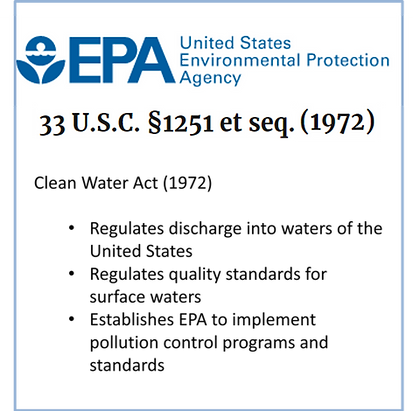
Clean Water Act
WATeR monitors the new permits and the self-reporting by permitted entities who are presently discharging into the watershed.
Non Point Source Pollution
Non point source pollution arises from many different causes, which include stormwater runoff, runoff of fertilizer and chemicals from crop farming, animal waste from ranching, failed septic systems, excessive lawn turf chemicals runoff, and even atmospheric deposition of elements in the water.
Unfortunately, most of the major tributaries feeding the Tellico Reservoir are categorized as "impaired" by TDEC, most frequently for bacteria from septic or animal waste. WATeR works with state and county agencies to identify and address opportunities to improve this situation.
The water quality of Tellico Lake's tributary streams is important because the streams are often the source of major water pollution. WATeR does water testing to support State and Federal Agencies who work with local property owners to improve the water quality of tributaries to the reservoir.


Cattle Watering
Local farmers are implementing better, less polluting, methods for watering cattle.

Soil Conservation
Crop management and stormwater runoff control are important elements for managing both the farm and the environment. Watch here for two short documentaries of local projects that have been recently completed.


Invasive Species
Hydrilla has been found in Tellico Lake
WATeR has found hydrilla in a few places in Tellico Lake. It is an invasive plant. Hydrilla is considered a noxious pest because it grows so rapidly, out competing and eliminating native species, and forming surface mats that hinder recreation, navigation, and water intakes. Read more here.

Asian Carp Migration in Tennessee River System
WATeR is tracking the migration of Asian Carp in the Lower Tennessee River System and the plans and progress to prevent them from reaching East Tennessee

Shoreline Erosion
Shoreline erosion is usually caused by wind and boat wakes. Erosion can cause land loss, tree falls and increased turbidity.
